Lebanon continues to face a rapidly escalating humanitarian crisis as ongoing hostilities drive widespread forced displacement across the country. As of February 28, a massive wave of enforced evacuations has pushed families out of villages in southern Lebanon and the Bekaa Valley, often under extremely limited timeframes. Many displaced families were unable to gather their belongings before fleeing, spending long hours on the roads seeking safety—either in overcrowded shelters, with relatives, or in temporary informal settings.
As of late March, the total number of displaced people has reached 1,162,237, placing immense strain on an already fragile country grappling with economic collapse and severe funding shortages. Immediate humanitarian efforts have focused on delivering basic necessities, particularly amid harsh winter conditions, yet needs continue to far exceed available resources. Conditions in collective shelters remain critical. Overcrowding, poor sanitation, lack of heating, and limited privacy are major concerns, especially for women and children. Many families share confined spaces, often with multiple households living in a single classroom.
Sahar Mohammad, a displaced mother from Nabatieh, described the chaos and trauma her family endured:
“My child was injured by a strike near our car,” she said. “There was no ambulance to reach the hospital, and we couldn’t go back. We left everything in the street, and my husband rushed him to the hospital. He is better now, but he is psychologically affected.”
She also described the difficult living conditions in shelters:
“Children don’t understand what war means. It’s very hard to live in a shelter. As a woman, it’s difficult to stay in a classroom with four or five families, around 14 people in one space, and we all share the same bathroom. At night, it gets very cold. We have to wait in line just to use the bathroom.”
Similar concerns were echoed by many displaced women, highlighting the lack of dignity and privacy in overcrowded shelters. Zaynab, a displaced mother currently living in a school shelter in Mount Lebanon, pointed to the growing number of families left without shelter due to high rental costs and limited capacity:
“As a mother, it’s hard to provide for my children. We can tolerate these harsh conditions, but our children cannot.”
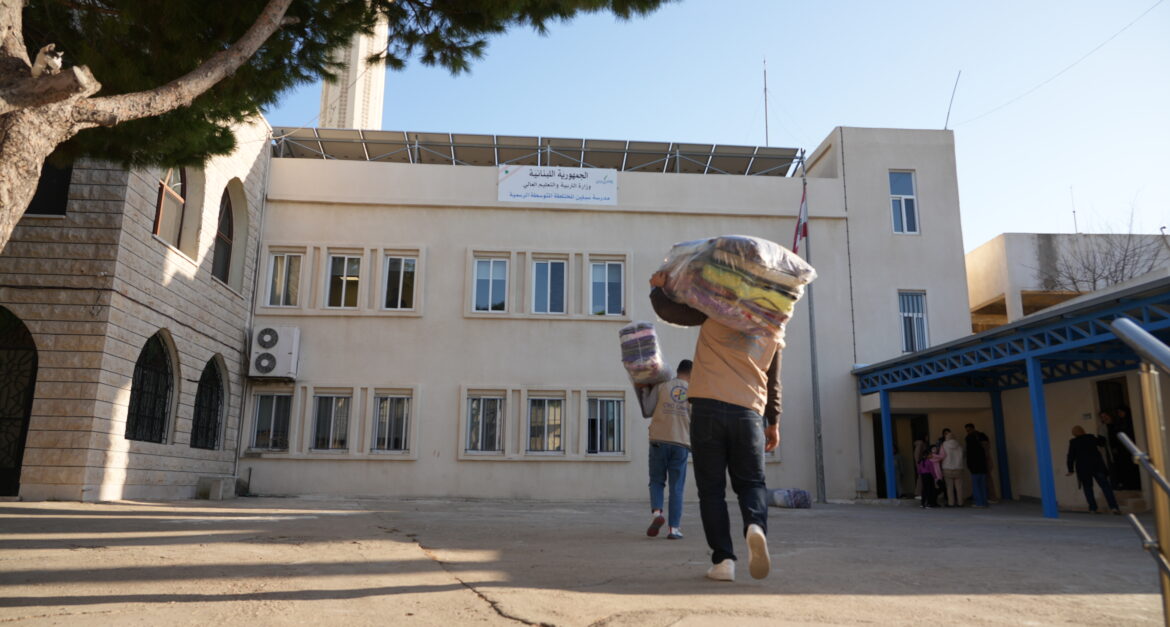
As part of the ongoing Emergency 2026 response, CVC teams continued delivering urgent shelter and relief assistance to displaced families across multiple regions in Lebanon through partnerships with international donors.
With the support of Africa Muslims Agency, CVC distributed bread packs, ready-to-eat kit, and water gallons to 1,650 displaced individuals in Sibline and Zaarouriye, helping families meet their most immediate daily needs. In collaboration with READ Foundation, 2,100 individuals received ready-to-eat food kits and hygiene kits, ensuring access to both nutrition and basic sanitation during displacement.
Through a large-scale support from Global Ehsan Relief, CVC implemented distributions across 10 areas in Mount Lebanon, reaching 2,990 individuals with bread packs, ready-to-eat kits, sleeping kits, and water gallons.
Meanwhile, the ongoing partnership with Stichting Vluchteling , which enabled the distribution of sleeping kits, including mattresses, blankets, and pillows, to 1,485 individuals across Beirut, Saida, and Ain El Remmaneh, helping displaced families access safer and more dignified living conditions.
These coordinated efforts reflect the power of humanitarian partnerships in responding quickly and effectively to the growing needs of displaced communities across Lebanon.